

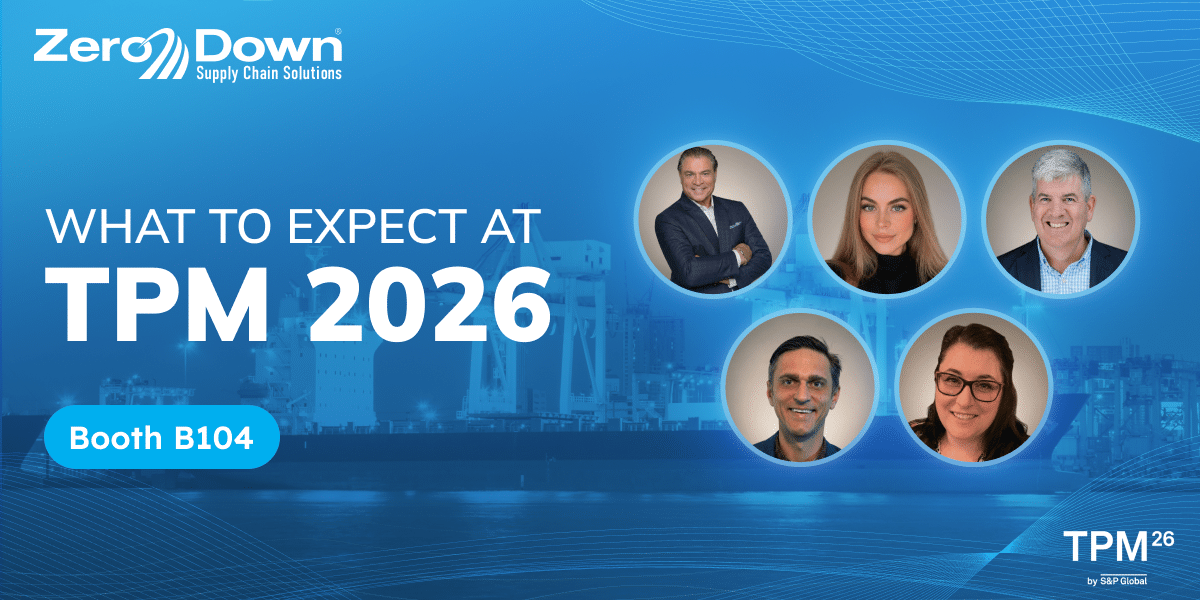


TPM 2026 (March 1-4, Long Beach Convention and Entertainment Center) is where annual trans-Pacific ocean freight contracts get negotiated, and shippers who arrive without clean historical data and a surcharge containment strategy will leave with contracts they cannot enforce. The global container ship order book exceeded 11 million TEU by late 2025, with an order-book-to-fleet ratio above 33% (Alphaliner/Linerlytica, 2025). That overcapacity gives beneficial cargo owners leverage, but only if they pair market intelligence with preparation and a plan for post-signing compliance.
Key takeaways:
- TPM 2026 runs March 1-4 in Long Beach, California, and is the primary venue for annual trans-Pacific ocean freight contract negotiations between BCOs and carriers.
- The record order book gives shippers more leverage than they have had in years, but only if they bring clean volume and cost data to the table.
- A negotiated rate means nothing without contract compliance. Shippers should build audit triggers for GRIs, D&D fees, and peak season surcharges into every agreement signed at TPM.
- The Drewry East-West Contract Rate Index dropped 3% year-over-year as of September 2025 (Drewry, 2025), signaling that carriers may be more open to competitive pricing.
What does the 2026 ocean freight market look like heading into TPM?
The 2026 market is shaping up as buyer-favorable, driven by fleet overcapacity, slowing trade growth, alliance restructuring, and evolving Suez Canal dynamics as select carriers begin phased returns via the Red Sea in early 2026.
An order book exceeding 11 million TEU means roughly one-third of the current global fleet is on order. Container ship deliveries are projected at 1.4 to 1.7 million TEU in 2026 (Alphaliner/Clarksons, 2025-2026), a significant drop from the approximately 2.1 to 2.3 million TEU delivered in 2025 (Clarksons/Alphaliner, 2025-2026). A return to normal Red Sea routings could release 5% to 6% of global fleet capacity (MSI, 2025) or reduce effective ship demand by up to 10% (BIMCO, 2025), depending on the pace of transition.
On the rate side, the Drewry East-West Contract Rate Index fell 3% year-over-year in the 12 months to September 2025, the first decline since July 2024, though average contract rates remained 25% above pre-pandemic levels (Drewry, 2025). Global maritime trade growth slowed to a projected 0.5% in 2025 (UNCTAD, 2025).
Major alliance restructuring also reshapes the negotiation landscape. The breakup of the 2M partnership between Maersk and MSC, the launch of the Gemini Cooperation between Maersk and Hapag-Lloyd, and the formation of the Premier Alliance among ONE, HMM, and Yang Ming all affect carrier capacity and service offerings on trans-Pacific lanes.
Carriers will resist aggressive rate cuts by citing elevated operating costs. BCOs should also note that BIMCO forecasts North American import container volumes to contract in early 2026 before returning to growth in the second half of the year, which could limit near-term leverage for US importers specifically. Press for rates that reflect supply-demand fundamentals, and use the overcapacity data to anchor your position.
What data should you bring to TPM 2026?
BCOs who arrive at carrier meetings without clean historical shipping data lose their strongest negotiating lever. Before Long Beach, pull and organize:
- 12-month shipping volumes by lane. Carriers price based on volume commitments. Exact TEU counts by origin-destination pair let you negotiate from precision.
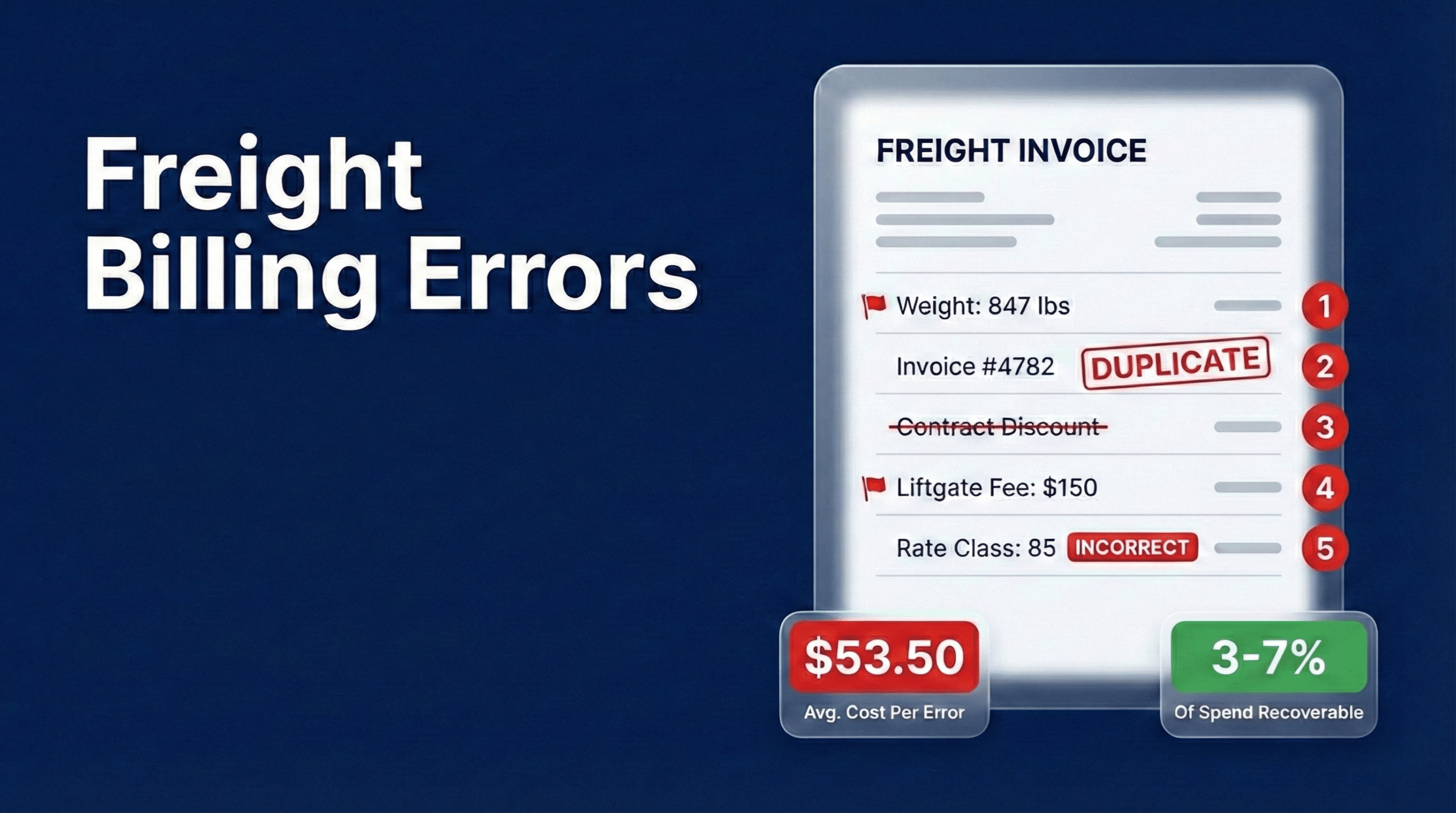
- Historical invoice error rates. A carrier with recurring billing discrepancies needs to answer for that before discussing renewal rates.
- Past D&D penalties by carrier. A breakdown of demurrage and detention fees by carrier and root cause gives you evidence to negotiate free time extensions and fee caps. Better ocean freight tracking gives you documentation to back up every claim.
- Surcharge history (GRIs, PSS, BAF). Track how many surcharges your carriers imposed over the past 12 months to reveal whether they function as cost adjustments or margin recovery tools.
- Contract compliance scores. Measure how often your existing carriers honored the rates and service levels in your current agreement.
How do you negotiate ocean contracts you can actually enforce?
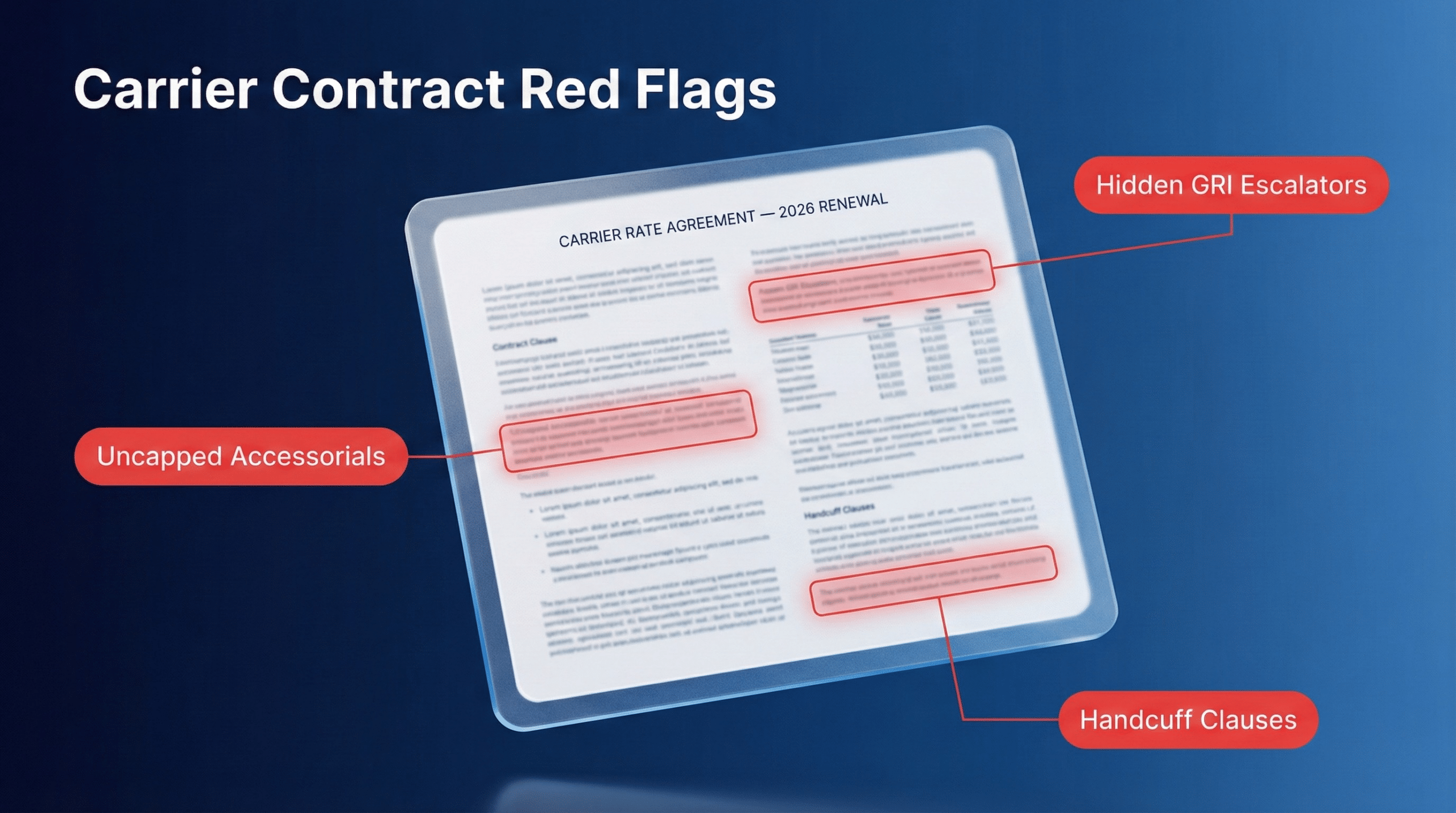
The contract signed at TPM is only as valuable as your ability to audit every invoice against its terms. Every agreement should include explicit GRI caps, D&D fee ceilings, and PSS limitations. For guidance on navigating these charges, see this breakdown of how to reduce common freight fees.
Watch for contract language that gives carriers unilateral authority to adjust rates without shipper consent. Review every agreement against this list of carrier contract red flags before signing.
Negotiated rate vs. actual cost: where ocean freight contracts leak money
| Contract line item | What you negotiated | Common billing discrepancy | How to prevent leakage |
|---|---|---|---|
| Base ocean rate | Fixed per-TEU rate by lane | Rate applied from wrong tariff or outdated schedule | Audit every invoice against the signed rate table |
| General Rate Increase | Capped at 2 per year, $100/TEU max | GRI applied outside agreed window or above the cap | Track GRI announcements against contract terms |
| Demurrage and detention | 7 days free time, $150/day cap | Free time calculated from vessel arrival, not container availability | Use tracking data to verify availability timestamps |
| Peak Season Surcharge | June to September only, $200/TEU max | PSS invoiced in October or above the ceiling | Flag charges outside the defined calendar window |
| Bunker Adjustment Factor | Tied to published fuel index, quarterly resets | BAF calculated using a different index or reset frequency | Confirm fuel index source and reset dates match contract |
How do you protect your rates after TPM ends?
Post-event contract compliance is where most shippers lose the value they negotiated. Within 60 to 90 days of a new agreement going into effect, billing discrepancies and unapproved surcharges begin to surface. Automated freight audit and payment catches these discrepancies at the transaction level before they accumulate, flagging the first misapplied rate table instead of letting errors compound for months. For real-world recovery examples, see these freight audit case studies.
From Zero Down CEO Brad McBride:
“We’re looking forward to attending TPM by S&P Global, one of the most important forums for understanding where the container shipping market is headed. With continued rate volatility, alliance shifts, and evolving carrier strategies, this year’s conversations around contract structure, capacity discipline, and long-term procurement strategy will be especially critical. As transportation spend management advisors, we’re focused on translating real-time market intelligence into actionable strategies that help shippers control cost, reduce risk, and strengthen commercial alignment. If you’ll be at TPM, we welcome the opportunity to connect and exchange perspectives.”
Heading to TPM 2026? Zero Down helps enterprise shippers audit ocean freight invoices against contracted rates, catching billing errors before they erode your margins. See how it works.
Frequently asked questions
What does TPM stand for in shipping?
TPM stands for Trans-Pacific Maritime. It is the largest annual conference focused on containerized ocean freight between Asia and North America, organized by JOC Events, part of S&P Global.
When and where is TPM 2026?
TPM 2026 takes place March 1-4, 2026, at the Long Beach Convention and Entertainment Center in California.
Who should attend the TPM conference?
TPM is designed for beneficial cargo owners, ocean carriers, freight forwarders, port operators, and logistics technology providers. The highest-value attendees are senior supply chain executives and procurement leaders who negotiate annual carrier contracts.
Is TPM worth attending for shippers?
Yes, particularly for BCOs managing large ocean freight budgets. TPM consolidates carrier commercial teams into a single four-day window, eliminating months of individual meetings. ROI depends on arriving with clean data, a clear negotiation strategy, and scheduled private meetings.
How can freight audit help after TPM negotiations?
Freight audit compares every carrier invoice against the specific rates, surcharge caps, and fee schedules in your signed contract. It catches discrepancies like unapproved GRIs, miscalculated D&D charges, and rate misapplications at the transaction level, recovering overcharges that would otherwise go unnoticed.