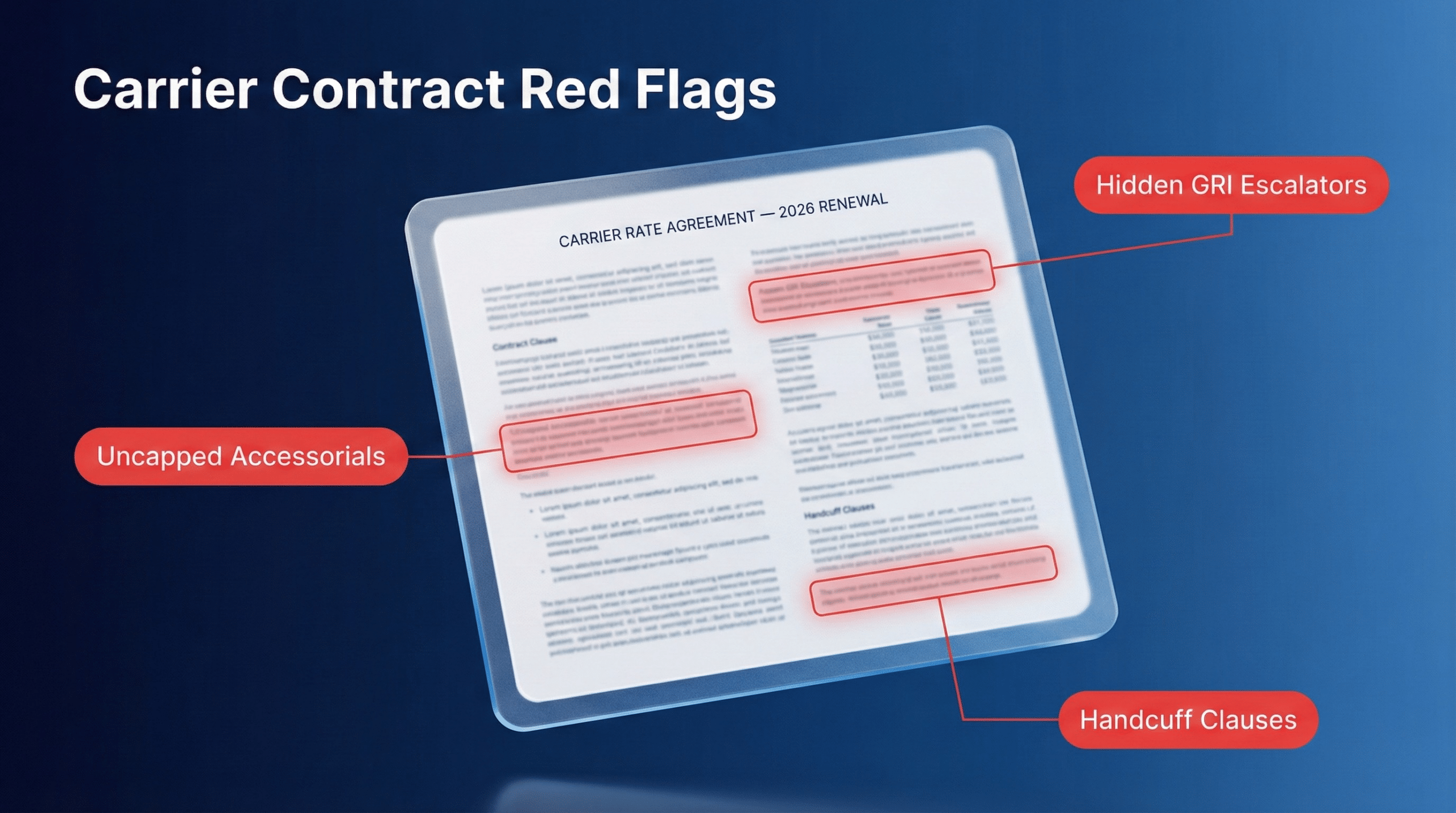




Carrier agreements shape your cost structure, influence delivery performance, and affect how well you can respond to changing market conditions. As your shipping needs evolve, contracts that were once well-aligned may become inefficient or outdated.
Carrier contract optimization gives you a way to stay ahead of those shifts. It’s a data-driven process for analyzing, adjusting, and improving your agreements so they work for how your business operates now, not how it looked when the contract was first signed.
Key Takeaways
- Carrier contract optimization reduces shipping costs and improves operations by aligning rates and terms with how you actually ship.
- Historical shipping data is your best tool for stronger contracts, helping you target savings, spot billing issues, and negotiate more favorable terms.
- A flexible, ongoing strategy drives long-term value, with regular reviews and adaptable terms that scale with your business.
What Is Carrier Contract Optimization?
Carrier contract optimization is the process of reviewing and improving the terms in your shipping agreements using data and performance insight. While it often begins with a rate review, optimization also involves auditing invoices, modeling cost scenarios, and benchmarking your current terms against market standards.
This approach helps ensure that your contract reflects your current shipping profile. Without regular review, agreements can quietly become misaligned with your operation, leading to higher costs or reduced service quality.
A strong carrier contract is built around how you actually ship. It should include:
- Rates and discounts that match your average weights, zones, and volumes
- Dimensional weight rules that fit your product mix
- Clear fuel and accessorial programs that reflect your real shipping needs
- Minimum charges that don’t wipe out negotiated discounts
- Service level agreements tied to your delivery expectations
- Flexibility to accommodate changes in your business
By focusing on these areas, optimization gives you better control over your costs and helps maintain consistent, high-quality carrier performance.
How to Optimize Your Carrier Contracts
Optimizing a carrier contract goes beyond chasing better rates. It starts with understanding how your business actually ships and then aligning every key contract term with that reality. The goal is to create a contract that supports your operation instead of working against it.
A well-optimized agreement includes rates and rules that reflect your unique shipping profile: what you ship, where it goes, how often, and how fast it needs to get there.
Here’s how to get there, step by step:
Analyze Shipping Data
Start by building a clear picture of your current operation. Look at 12 months of shipment history across all modes and carriers. Focus on:
- Average package size, weight, and volume
- Shipping zones and delivery distances
- Service level usage (ground, 2-day, express, etc.)
- Frequency of deliveries by region or customer type
This baseline allows you to evaluate whether your existing discounts and rate tiers are actually aligned with how you ship. If your contract is heavily weighted toward next-day services, but 80% of your shipments are ground, you’re not set up to maximize savings.
You should also identify your current revenue tiers (or bands). Carriers structure discounts based on total spend, and shifting into a more favorable tier can unlock deeper savings.
But keep in mind that gathering this data isn’t always easy. It often means pulling from multiple carrier portals, invoice systems, and internal order records. Without the right tools, this step alone can eat up dozens of hours and introduce serious errors.
Audit Invoices
Your invoices tell you whether your contract is being applied as intended and which fees are eating into your margin. Common issues include:
- Duplicate charges
- Invalid or excessive accessorials
- Missed guaranteed service refunds
- Incorrect dimensional weight billing
Auditing exposes these issues and helps you prioritize which terms to adjust for improved contract performance. For example, if accessorial fees make up 20% of your total spend, negotiating caps or exemptions should be a focus.
Compare Rates Against the Market
Once you understand your data, compare it to industry standards. Are your rates competitive for your shipment profile? How do your DIM factors, fuel tables, and accessorial programs compare to what other shippers with similar volumes are seeing?
Benchmarking brings clarity and removes guesswork from negotiations. It helps you:
- Identify terms that are out of step with current market norms
- Create leverage by showing competitive gaps
- Validate where your contract is strong and where it falls short
This is especially helpful when justifying specific requests, like increasing the DIM divisor or lowering your minimum charges. It also allows you to evaluate and negotiate more advanced terms, like capping General Rate Increases (GRIs) to avoid excessive year-over-year cost escalations in parcel contracts.
Model Contract Changes
Rather than guessing at savings, model how different contract structures would impact your real shipments. For example:
- What would you have paid last quarter under a higher DIM factor?
- How much would you save if a minimum charge was waived for lightweight packages?
- Would a flat-rate accessorial program reduce unpredictable fees?
This kind of re-rating shows the actual financial outcome of contract changes. It lets you prioritize which terms to renegotiate based on hard data, not surface-level discount percentages.
Use Data to Strengthen High-Impact Terms
Using the data you’ve collected and the insights you’ve gained, enter contract negotiations strategically. Don’t just ask for a lower base rate. Target the terms that affect your total cost the most, and use your shipping profile to justify those requests.
Revisit the areas that define a strong contract:
- Rates and Discounts: Make sure they reflect your actual shipping mix, like average weights, zones, and volumes, not carrier defaults or general pricing templates.
- Dimensional Weight Rules: Advocate for a DIM divisor that aligns with your packaging profile. Even small improvements here can result in significant savings. For example, switching your DIM divisor from 139 to 166 on a 12 x 12 x 12 package saves you 15% per package across your shipments.
- Fuel and Accessorial Programs: These often contain hidden costs. Look at complex charges like Peak Season Surcharges, Large Package Fees, and Fuel Surcharge Tiers. Don’t just reduce the fee; negotiate how it’s calculated and when it applies.
- Minimum Charges: Spot where minimums are triggered unnecessarily, especially on lightweight shipments. Carriers may waive or adjust them based on volume thresholds.
- Service-Level Commitments: Add incentives or penalties tied to on-time delivery performance. Missed windows should trigger rebates or adjustments.
- Contract Flexibility: Build in regular review periods, escalation clauses, or scaling terms tied to business growth, new markets, or carrier performance.
These are the levers that drive real optimization. Focusing on them turns your contract from a static document into a flexible tool for reducing costs and improving service quality.
How Often Should You Optimize Contracts?
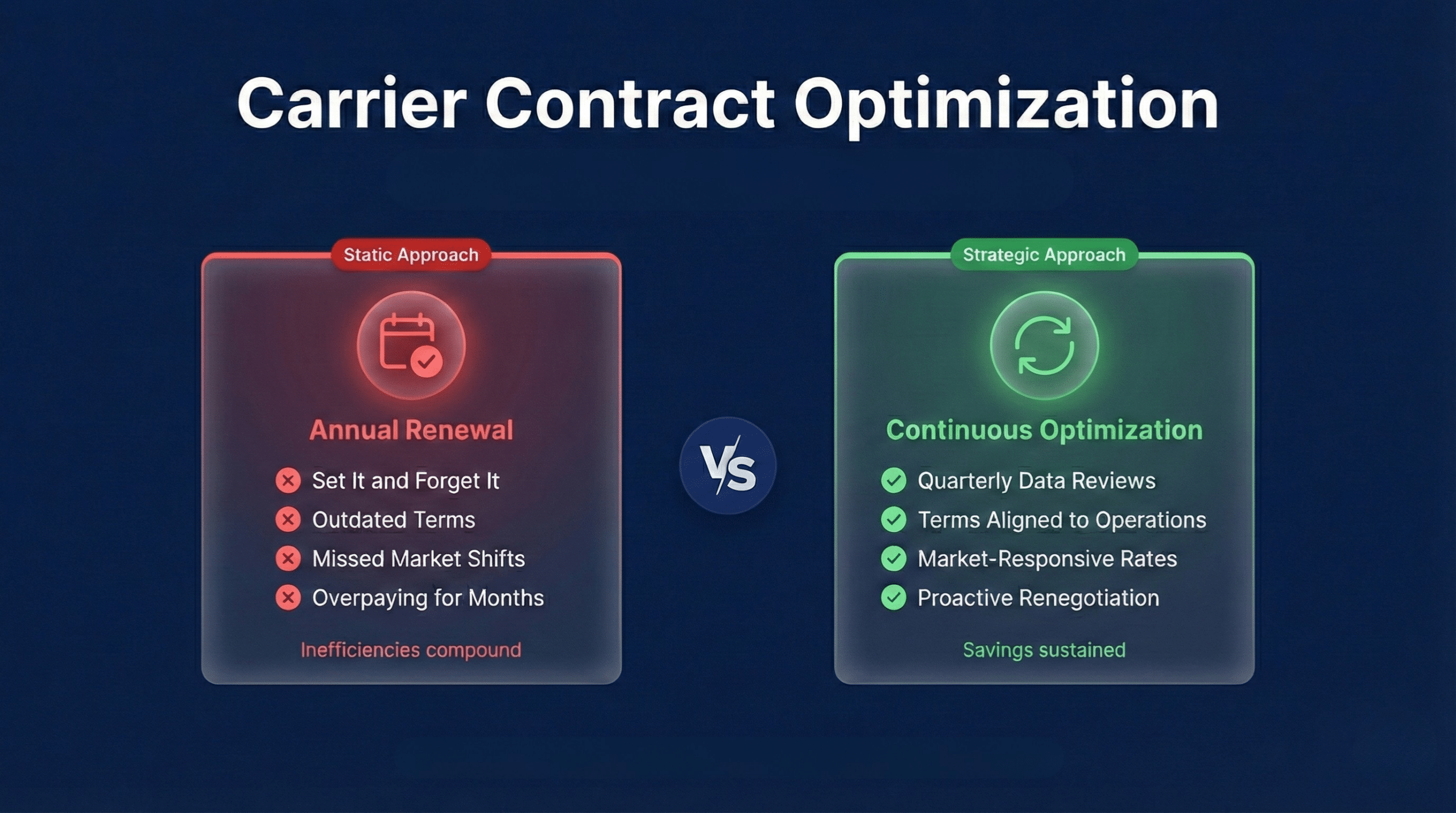
If you’re only thinking about your carrier contracts when it’s time to renew, you’ll always be a step behind. Effective carrier contract management requires you to be proactive, constantly looking for savings opportunities, monitoring performance, and staying up to date on the market.
Instead of once a year or longer, consider reviewing your carrier contracts when:
- Shipping volume or service mix changes
- Carrier fee structures are updated
- A new facility or fulfillment model goes live
- Service performance declines, or refunds are missed
- You haven’t reviewed your contract in the last 12 months
Regular reviews help you stay competitive, even when your business hasn’t changed.
Secure Better Contract Terms with AAAAIM From Zero Down
Optimizing a carrier contract may seem straightforward, but it’s rarely simple. It takes deep experience, hours of data analysis, and the confidence to go toe-to-toe with reps from shipping companies whose job is to protect their margins. And for logistics teams already stretched thin by day-to-day demands, taking on that workload just isn’t practical.
At Zero Down, we help high-volume shippers take full control of their carrier contracts using our proven optimization framework, AAAAIM. It’s designed to uncover hidden cost drivers, align your terms with how you actually ship, and drive better outcomes from your carrier relationships.
Here’s how AAAAIM works:
- Assessment – We review your current contracts and shipping data to find areas where you’re overspending or missing value
- Alignment – We work with you to set clear goals and develop a negotiation strategy tailored to your operation
- Advisement – We help evaluate proposals and negotiate new terms based on accurate shipment modeling
- Agreement – Once you’re ready, we guide you through selecting the right agreement and preparing for the rollout
- Implementation – We deploy contract updates and equip you with the tools and visibility needed to execute
- Maintenance – We continue monitoring performance and flag new optimization opportunities as your business evolves
This structured process helps you confidently approach negotiations and build smarter, more flexible shipping agreements.
Case Study: 18% Cost Savings Secured
One client came to us after receiving a carrier contract proposal that claimed strong savings. We ran a second analysis using our FreightOptics platform and discovered gaps the initial review had missed.
By applying our AAAAIM framework, we identified actionable changes and helped the client renegotiate. The result: a verified 18% reduction in overall shipping costs without switching carriers or sacrificing service quality.
Achieve Stronger Savings With Optimized Carrier Contracts
Carrier contract optimization is one of the most effective ways to take control of your shipping costs and improve operational performance. By analyzing your needs, leveraging your data, and focusing on high-impact contract terms during negotiations, you can reduce your shipping spend without hurting service quality. That’s a win for you and your customers.
Whether you manage parcel, freight, or both, the key is to approach optimization as an ongoing process, not a one-time event. With the right insight, structure, and guidance, your agreements can evolve with your business and deliver measurable long-term savings.
If you’re ready to review your current carrier agreements or want expert support negotiating better terms, we’re here to help. Zero Down’s contract optimization solution can give you a clear picture of where your contract stands and where it can go.
FAQ
What is carrier contract optimization, and how does it help save money?
Carrier contract optimization is the process of aligning your shipping agreements with your actual shipping patterns to reduce unnecessary costs. By renegotiating parcel contracts and service level agreements, shippers can save money on rates, accessorial fees, and more.
Can I renegotiate with my existing carrier, or should I switch providers?
You don’t always need to switch. Many businesses find savings by renegotiating with their existing carrier, especially when armed with strong shipping data and a clear understanding of their contract terms. Optimization helps improve your current contract without disrupting operations.
How does contract management software support carrier contract management?
Contract management software centralizes your carrier agreements, shipment history, and invoice data. This makes it easier to track compliance, audit charges, and uncover discrepancies, which are all key steps for effective carrier contract management and long-term savings.
What should I focus on during the negotiation process?
Focus on cost drivers like dimensional weight rules, minimum charges, and accessorial fees. Using benchmarks and accurate modeling, the negotiation process should prioritize changes that yield significant cost savings and improve carrier performance.
Why is a mutually beneficial agreement important in carrier contract negotiations?
Mutually beneficial agreements strengthen carrier relationships and improve service quality. When both parties benefit from the contract terms through incentives, volume commitments, or performance-based clauses, it leads to more reliable delivery and long-term savings.