


Key Takeaways
- Substantial ROI through Cost Control: A TMS identifies and eliminates “hidden” logistics costs by automating freight audits, reducing manual labor hours, and utilizing least-cost route optimization to slash shipping spend.
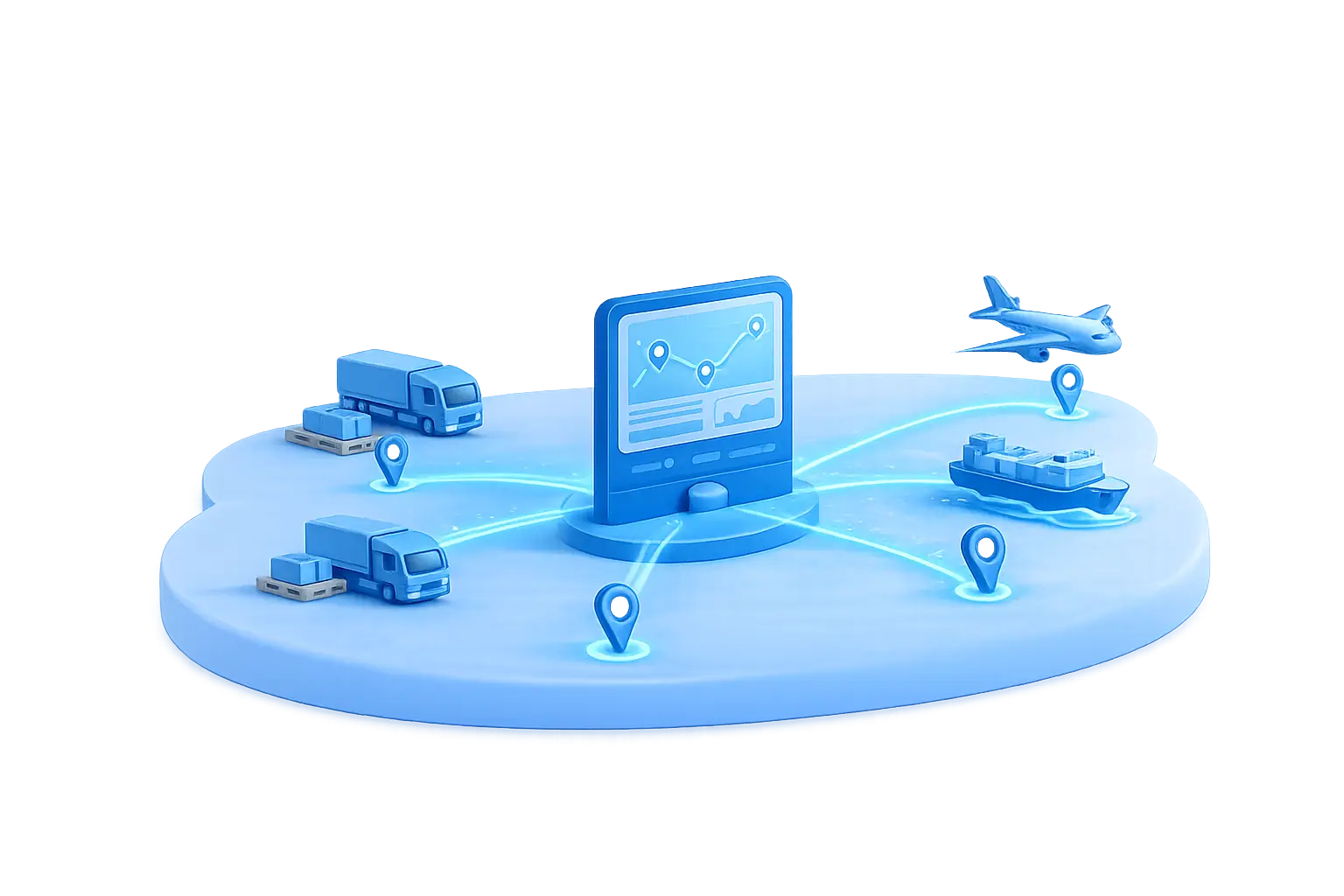
- Enhanced Visibility and Customer Trust: Real-time, multimodal tracking provides end-to-end visibility across truck, rail, ocean, and air modes, enabling businesses to proactively manage delays and maintain brand reputation with accurate delivery estimates.
- Operational Efficiency via Automation: Moving from manual processes to automated carrier selection and load consolidation enables businesses to remain competitive, agile, and responsive to market fluctuations in real time.
- Strategic Risk Mitigation and Resilience: Beyond simple freight savings, a TMS helps close liability gaps in carrier contracts and builds “predictive resilience,” allowing companies to anticipate disruptions rather than managing them as last-minute crises.
- Critical System Integration: For maximum impact, a TMS must be seamlessly integrated with existing ERP and WMS systems to ensure unified data flow, reduce entry errors, and provide a single source of truth for the entire supply chain.
- Scalability for Growth: Modern cloud-based TMS solutions offer the flexibility to scale with a business, making them an essential investment for companies of all sizes seeking to optimize their logistics footprint and improve financial control.
Mastering Global Logistics: Why Every Growing Business Needs a Transportation Management System (TMS)
Imagine a scenario where every shipment you send is a gamble—a roll of the dice involving volatile fuel prices, unpredictable carrier delays, and the constant threat of manual invoicing errors. For many logistics managers, this isn’t just a hypothetical nightmare; it is a daily reality that quietly erodes profitability. In an era where customers expect “Amazon-like” transparency and lightning-fast delivery, operating without centralized control is a recipe for obsolescence. The “invisible drain” of manual processes and poor route planning can lead to significant financial leakage, yet many organizations hesitate to modernize their approach.
This is where the transportation management system comes into play. Often referred to as a TMS, this sophisticated software platform serves as the central nervous system of the modern supply chain. It is designed to optimize the planning, execution, and tracking of goods as they move through the global economy. Rather than merely serving as a digital filing cabinet for carrier contacts, a robust platform leverages data to automate carrier selection, audit freight bills, and provide real-time visibility to protect your brand reputation.
In this comprehensive guide, we will explore why adopting a transportation management system is no longer a luxury reserved for Fortune 500 companies but rather a vital survival tool for any business that moves goods. We will delve into how a TMS uncovers hidden costs, empowers you to outmaneuver automated competitors, and builds the predictive resilience necessary to navigate today’s volatile market. Whether you are looking to slash shipping spend or improve customer satisfaction, understanding these logistics essentials is your first step toward total supply chain mastery.
What Risks Do You Face If You Skip a Transportation Management System?
Skipping a Transportation Management System (TMS) exposes your business to significant risks that directly affect profitability, competitiveness, and customer relationships. Without a TMS, hidden costs accumulate, operational efficiency suffers, brand reputation declines, and liability gaps widen, undermining your entire logistics strategy.
Hidden Logistics Costs That Drain Your Profits
Without a TMS, many logistics expenses go unnoticed. Inefficiencies in route planning, manual freight auditing errors, and missed carrier discounts inflate costs. Excessive manual processes increase labor hours and errors, impacting your bottom line. These hidden charges silently erode profits over time.
How Automated Competitors Can Overtake Your Operations
Competitors leveraging automated TMS solutions optimize shipments in real time, adapt to market fluctuations, and reduce transit times. Skipping automation leaves your operations reactive, slower, and less flexible, causing you to lose market share to agile, data-driven rivals.
How Shipping Delays Destroy Brand Trust and Customer Satisfaction
Delays caused by poor shipment visibility and lack of proactive communication frustrate customers. Without a TMS, accurately tracking shipments becomes difficult, leading to missed delivery windows and eroded trust. Persistent delays degrade customer loyalty and brand reputation.
Where Liability Gaps Hide in Old Carrier Contracts
Legacy contracts often lack clear liability terms for damages or delays. Without a TMS to manage contract compliance and monitor carrier performance, liability exposures increase. These gaps create financial risks during disputes and limit your ability to hold carriers accountable.
What Is a Transportation Management System, and Why Does It Matter for Your Supply Chain?
A Transportation Management System (TMS) is a software platform that optimizes the planning, execution, and tracking of transportation activities within a supply chain. It enhances efficiency, reduces costs, and improves visibility by automating routing, carrier selection, and freight management processes. Integrating a TMS is vital for maintaining competitive, agile, and transparent supply chain operations.
Key Features Every TMS Should Offer for Transportation Planning
A robust TMS includes:
- Route optimization to minimize transit time and costs
- Carrier management for selecting and rating transport providers
- Real-time shipment tracking and status updates
- Freight auditing and payment automation
- Load consolidation to maximize vehicle utilization
- Reporting and analytics for continuous improvement
These features collectively streamline transportation planning and execution.
Strategic Role of TMS in Your Supply Chain Movement
A TMS plays a strategic role by aligning transportation with broader supply chain goals. It enables responsive decision-making through data-driven insights, supports regulatory compliance, and enhances customer satisfaction through reliable delivery performance. By improving collaboration between shippers, carriers, and partners, a TMS drives operational resilience and scalable growth.
Beyond Freight Savings: What Strategic Value Does TMS Deliver to Your Business?
Transportation Management Systems (TMS) extend far beyond freight cost reduction by driving operational efficiency, enhancing visibility, and enabling predictive logistics resilience. This strategic technology transforms transportation management into a proactive, cost-controlling, and risk-mitigating function critical to business success.
How TMS Drives Efficiency and Cost Control in Transportation Operations
TMS streamlines transportation workflows by automating carrier selection, load optimization, and route planning. It reduces manual errors and ensures compliance with contracts and regulations. This leads to lower operational costs, minimized delays, and improved asset utilization, directly impacting the bottom line.
Stop Guessing: Real-Time Tracking and Visibility to Eliminate Uncertainty
With integrated real-time tracking, TMS provides end-to-end shipment visibility. Businesses gain instant updates on shipment status, location, and potential disruptions. This transparency reduces uncertainty, enhances decision-making, and improves customer service by enabling accurate delivery estimates.
How Predictive Resilience Beats Last-Minute Crisis Management in Logistics
TMS leverages data analytics and historical trends to anticipate potential disruptions before they occur. Predictive resilience enables businesses to plan alternative strategies proactively, reducing the need for last-minute crisis responses. This shift from reactive to strategic logistics ensures smoother operations and sustained supply chain reliability.
Essential TMS Features That Maximize Your Transportation ROI
A robust Transportation Management System (TMS) drives higher transportation ROI by integrating critical features that reduce costs, improve visibility, and ensure invoicing accuracy. These capabilities empower logistics teams to make smarter decisions, optimize routes, and safeguard budgets.
How Least-Cost Route Optimization Tech Slashes Shipping Spend
Least-cost route optimization technology calculates the most cost-effective routes by analyzing distance, fuel consumption, tolls, and transit times. It balances multiple parameters to minimize expenses while meeting delivery deadlines. Key benefits include:
- Reduced fuel and labor costs through optimized mileage
- Avoidance of high-cost routes and congested areas
- Faster delivery times improve customer satisfaction
- Dynamic rerouting in response to real-time disruptions
This technology directly cuts shipping spend by ensuring every route is financially efficient.
Why Multimodal Visibility Is Non-Negotiable for Shipment Tracking
Multimodal visibility provides end-to-end tracking across different transportation modes—truck, rail, ocean, and air. This comprehensive insight enables:
- Real-time location updates for accurate delivery ETAs
- Early identification of delays or disruptions
- Coordination across carriers to streamline handoffs
- Enhanced customer communication and transparency
Without multimodal visibility, companies risk blind spots that hinder proactive issue resolution and increase operational costs.
How Automated Freight Audits Prevent Overbilling and Invoicing Errors
Automated freight audit features systematically verify freight bills against contracts and service records. This reduces manual errors and fraud, providing:
- Accurate billing verification to prevent overcharges
- Identification of duplicate or incorrect invoices
- Automated reconciliation speeds accounts payable processes
- Detailed audit trails for compliance and dispute resolution
Automating freight audits protects budgets from costly invoicing mistakes and improves financial control.
By prioritizing these essential TMS features—least-cost route optimization, multimodal visibility, and automated freight audits—transportation managers can significantly enhance operational efficiency and maximize ROI.
How Difficult Is It to Integrate and Adopt a Transportation Management System?
Integrating and adopting a Transportation Management System (TMS) varies in complexity but is manageable with clear planning and stakeholder engagement. Key challenges include ensuring seamless system connections, realistic implementation timelines, addressing internal resistance, and aligning company culture to support change.
Connecting Your TMS with ERP and WMS Systems for Seamless Integration
Effective TMS integration requires direct, real-time data exchange with Enterprise Resource Planning (ERP) and Warehouse Management Systems (WMS). This enables unified supply chain visibility and reduces manual data entry errors. Integration often involves API connections or middleware tailored to the existing IT infrastructure, which demands technical expertise but ensures cohesive operations across procurement, inventory, and transportation functions.
Actual Implementation Timelines for Cloud-Based TMS Solutions
Cloud-based TMS implementations are generally faster than on-premises installations due to simplified infrastructure needs. Typical timelines range from a few weeks to a few months, depending on system complexity and customization. Key factors affecting duration include data migration, user training, and testing. Agile project management and vendor collaboration accelerate deployment and mitigate delays.
Winning Team Buy-In and Overcoming Shadow Logistics Processes
Resistance often stems from entrenched informal workflows, or “shadow logistics,” outside official systems. Securing team buy-in requires transparent communication about TMS benefits, early user involvement, and hands-on training. Demonstrating how the TMS reduces workload and errors persuades skeptics to transition from legacy practices to the new system.
How to Ensure Your Culture Adapts to TMS Change Management
Cultural adaptation demands ongoing leadership support and clear change management strategies. Establishing champions within departments, setting measurable goals, and rewarding early adopters fosters a positive environment. Continuous feedback loops and responsive support help embed TMS workflows into everyday operations, driving lasting cultural acceptance.
How to Measure the Real ROI of Your TMS Investment
Measuring the real ROI of a Transportation Management System (TMS) involves quantifying both direct cost savings and efficiency improvements. Focus on tangible benefits such as reduced labor hours and fewer errors, alongside strategic gains from automated dispute management. These factors reveal the full financial impact of your TMS.
Calculating ROI: Labor Savings and Mistake Reduction with Automation
Automating transportation workflows with a TMS reduces manual tasks and significantly lowers labor costs. It reduces errors in data entry, freight billing, and route planning, preventing costly mistakes. Calculate ROI by comparing pre- and post-implementation labor hours and error-related expenses. Automation also accelerates processes, adding value through increased throughput and reliability.
Managing Carrier Disputes Automatically with TMS Data
TMS platforms maintain detailed shipment and billing records, enabling automated dispute resolution with carriers. This reduces administrative overhead and shortens resolution times, protecting cash flow and vendor relationships. Measuring savings here involves tracking reduced dispute cycle times and fewer manual interventions, which directly impact operational costs and service quality.
What Is the Total Cost of Ownership for a Transportation Management System?
The total cost of ownership (TCO) for a Transportation Management System (TMS) encompasses all expenses associated with acquiring, implementing, and maintaining the system throughout its lifecycle. Understanding TCO helps businesses evaluate the true financial commitment beyond initial purchase costs.
Software Licensing and Subscription Fees
This includes one-time license costs or recurring subscription payments for cloud-based TMS platforms. Pricing varies by the number of users, shipment volume, and feature sets.
Implementation and Integration Costs
Expenses for system setup, customization, and integration with existing enterprise resource planning (ERP) or warehouse management systems fall under this category. These costs depend on system complexity and vendor support levels.
Maintenance and Support
Ongoing technical support, software updates, and training require budgeting. Maintenance may be bundled in subscription fees or billed separately for perpetual licenses.
Operational and Infrastructure Costs
Consider additional costs, such as hardware, network infrastructure, and internal IT resources, required to operate the TMS effectively. Cloud solutions typically reduce these expenses compared to on-premise installations.
How to Select the Transportation Management Software That Fits Your Business Needs
Selecting the right transportation management software (TMS) requires aligning features with your business scale and operational demands. A suitable TMS optimizes routing, tracking, and cost management without overwhelming resources or budget.
What to Look for If You’re a Small or Mid-Sized Business Using TMS
Small and mid-sized businesses should prioritize ease of use, scalability, and integration capability. Key features include:
- User-friendly interfaces for quick adoption
- Modular tools to add functions as growth demands
- Cloud-based platforms to reduce IT overhead
- Essential analytics for shipment visibility and performance monitoring
- Support for multiple carriers without complex setup
Free vs. Paid: Pitfalls and Rewards of Open-Source TMS Solutions
Open-source TMS solutions can lower upfront costs and offer customization freedom, but require technical expertise for installation and maintenance. Risks include limited vendor support and potential security vulnerabilities. Paid solutions provide robust customer service, regular updates, and comprehensive features, but at higher initial and ongoing costs. Choosing depends on your technical resources and long-term scalability needs.
Should Your Industry Invest in a TMS? Real-World Industry Use Cases
Investing in a Transportation Management System (TMS) can significantly enhance operational efficiency and cost control across diverse industries. A TMS optimizes shipping routes, automates carrier selection, and improves supply chain visibility, enabling businesses to reduce delays and increase profitability. Evaluating industry-specific benefits reveals how a TMS delivers value beyond basic logistics management.
How Other Industries Profit from TMS Deployments and Supply Chain Optimization
Manufacturing: Streamlines inbound and outbound logistics, reducing raw material delays and optimizing delivery schedules to maintain continuous production flow.
Retail: Enhances multi-channel distribution, integrates inventory management, and improves last-mile delivery accuracy to meet consumer demands efficiently.
Healthcare: Ensures timely, compliant transport of medical supplies and pharmaceuticals, safeguarding product integrity and patient safety.
Food and Beverage: Maintains cold chain compliance and reduces spoilage through real-time shipment tracking and dynamic routing adjustments.
Is a TMS Still Worth It? Overcoming Common Objections to Transportation Management Systems
Transportation Management Systems (TMS) remain essential for optimizing logistics despite common objections. They deliver significant efficiency, cost savings, and improved shipment visibility that manual processes cannot match.
Cost Concerns Are Offset by ROI
While upfront investment in a TMS may seem high, the system reduces freight costs, automates manual tasks, and decreases errors. This leads to measurable savings that justify the initial expense over time.
Complexity and Integration Issues Are Manageable
Modern TMS solutions offer user-friendly interfaces and flexible integration with existing enterprise systems. Implementation challenges are minimized through vendor support and phased rollouts.
Scalability Supports Business Growth
A TMS grows with your operations, adapting to changing volumes and routes. This flexibility prevents future bottlenecks and supports the efficient handling of expanding logistics demands.
Unlocking the Power of TMS: What You Need to Know Before You Begin
Transcranial Magnetic Stimulation (TMS) is a non-invasive, FDA-approved therapy for various neurological and psychiatric conditions, particularly depression. Before beginning TMS, understand its mechanism of action, treatment protocol, and patient suitability to maximize effectiveness and safety.
What Is TMS?
TMS uses electromagnetic pulses to stimulate specific brain regions, modulating neural activity without surgery or anesthesia. It targets the prefrontal cortex, influencing mood and cognitive function.
How Does the Treatment Work?
Sessions typically last 20-40 minutes over several weeks. Patients sit awake while a coil delivers magnetic pulses. Effects accumulate with repeated sessions, promoting symptom relief.
Who Is a Suitable Candidate?
Ideal candidates have treatment-resistant depression or neurological disorders unresponsive to medication. Screening includes medical history and brain imaging to exclude contraindications.
Your Next Steps: Making an Informed TMS Decision
Choosing the right Transportation Management System (TMS) requires a clear understanding of your business needs and the system’s capabilities. This decision directly impacts operational efficiency, cost control, and supply chain visibility. Focus on evaluating key factors methodically to ensure alignment with strategic goals.
Assess Your Business Requirements
Identify specific logistics challenges, shipment volumes, and integration needs. A thorough requirements analysis prioritizes features such as route optimization, carrier management, and real-time tracking.
Evaluate Vendor Solutions
Compare TMS providers based on scalability, user interface, support services, and compatibility with existing enterprise systems. Consider future growth and technological adaptability.
Plan for Implementation and Training
Allocate resources for smooth deployment and employee training to maximize system adoption and ROI. Establish a clear timeline with milestones and support plans.
TMS Essentials: Fast Answers to Your Top Questions
A Transportation Management System (TMS) streamlines logistics by automating planning, execution, and optimization of shipments. It enhances supply chain efficiency, reduces costs, and provides real-time shipment visibility, making it vital for modern logistics operations.
What Is a TMS?
A TMS is software designed to manage transportation processes. It facilitates route planning, carrier selection, freight auditing, and freight payment. By integrating with other supply chain systems, it centralizes transportation data for improved decision-making.
How Does a TMS Improve Efficiency?
A TMS automates manual tasks such as load building and carrier assignment, reducing errors and time spent. It optimizes routes and modes of transport to cut costs and improve delivery speed. Real-time tracking enables proactive issue resolution.
Who Benefits from Using a TMS?
Manufacturers, retailers, and logistics providers benefit from TMS by gaining better control over shipping operations. It scales with business growth and supports compliance with industry regulations, enhancing overall supply chain performance.
Future-Proofing Your Logistics Strategy with a Transportation Management System
Adopting a Transportation Management System is a fundamental step toward securing a competitive edge in today’s volatile logistics landscape. By transitioning from reactive manual processes to automated, data-driven strategies, businesses can effectively mitigate hidden costs, bridge liability gaps, and foster lasting brand trust through superior delivery performance. From the initial evaluation of features like multimodal visibility to the long-term realization of ROI through labor savings and route optimization, a TMS serves as the backbone of a resilient supply chain. Investing in the right platform and navigating the integration process ensures that your operations remain agile, scalable, and capable of meeting the evolving demands of the global market.
Frequently Asked Questions
What are the primary risks of not using a Transportation Management System?
Skipping a TMS exposes your business to hidden logistics costs, such as manual freight auditing errors and missed carrier discounts. Without these systems, you face reduced shipment visibility, which leads to shipping delays, damaged brand trust, and potential liability gaps in legacy carrier contracts that lack clear accountability terms.
What key features should a robust TMS offer for transportation planning?
A robust TMS should provide route optimization to minimize transit times, carrier management for selection and rating, and real-time shipment tracking. Additionally, it must include freight auditing and payment automation, load consolidation to maximize vehicle utilization, and comprehensive analytics for continuous performance improvement.
How long does it typically take to implement a cloud-based TMS?
Cloud-based TMS implementations are generally more efficient than on-premises setups, with timelines typically ranging from a few weeks to a few months. The exact duration depends on the complexity of the system, the amount of data migration required, and the depth of integration needed with existing ERP or WMS platforms.
What factors contribute to the Total Cost of Ownership (TCO) of a TMS?
The TCO includes software licensing or recurring subscription fees, initial implementation and integration costs, and ongoing maintenance and support. It also encompasses operational and infrastructure costs, such as internal IT resources and hardware, though cloud-based solutions often minimize these compared to on-premise installations.
How does a TMS handle international shipping and cross-border customs documentation?
While many base systems focus on domestic freight, advanced TMS platforms include Global Trade Management (GTM) modules. These modules automate the generation of customs documentation, such as commercial invoices and certificates of origin, ensure compliance with international trade regulations, and manage multi-currency freight auditing.
Can a TMS integrate with parcel carriers like FedEx or UPS for last-mile delivery?
Yes, many TMS solutions offer parcel integration modules. This allows businesses to manage small-package shipments alongside LTL (Less-Than-Truckload) and FTL (Full Truckload) freight, enabling users to compare rates across parcel carriers, print shipping labels, and track last-mile deliveries within a single interface.
How does a TMS assist with sustainability goals and tracking carbon emissions?
Modern TMS platforms are increasingly incorporating “green logistics” features. By optimizing routes to reduce mileage and consolidation to minimize the number of trips, the system naturally reduces fuel consumption. Many platforms now provide specific reporting tools that calculate the carbon footprint of each shipment based on the mode of transport and distance traveled.
Is it possible to manage “white glove” services or specialized handling requirements?
A TMS can be configured to manage specialized requirements by assigning “service attributes” to shipments. This ensures the system only selects carriers that provide specific capabilities, such as lift-gate delivery, inside pickup, white-glove assembly, or specialized equipment for oversized freight.
What happens to our historical data if we decide to switch TMS providers?
Data portability is a critical consideration during the selection process. Most cloud-based providers allow you to export your shipment history, carrier performance metrics, and audit trails via API or flat files. It is important to verify data ownership clauses in your contract to ensure you can retain this information for long-term trend analysis.
Does TMS help in managing warehouse dock scheduling?
While primarily focused on transit, many TMS solutions offer dock scheduling modules or integrate directly with Warehouse Management Systems (WMS). This coordination allows carriers to book specific time slots for pickups and deliveries, reducing yard congestion, minimizing driver detention fees, and improving warehouse labor planning.